
Co-Parenting Workshop · Harrow Business Centre · North West London
You cannot change your co-parent. You can change how you respond to them.
'I want a better co-parenting relationship for my children. I just don't know where to start when every conversation becomes a conflict.'
A structured, one-to-one, confidential workshop for separated parents in North West London who want to reduce conflict, build practical communication strategies, and find a way forward that genuinely works for their children. Delivered by a family solicitor with thirty years of professional experience, and a mediator.
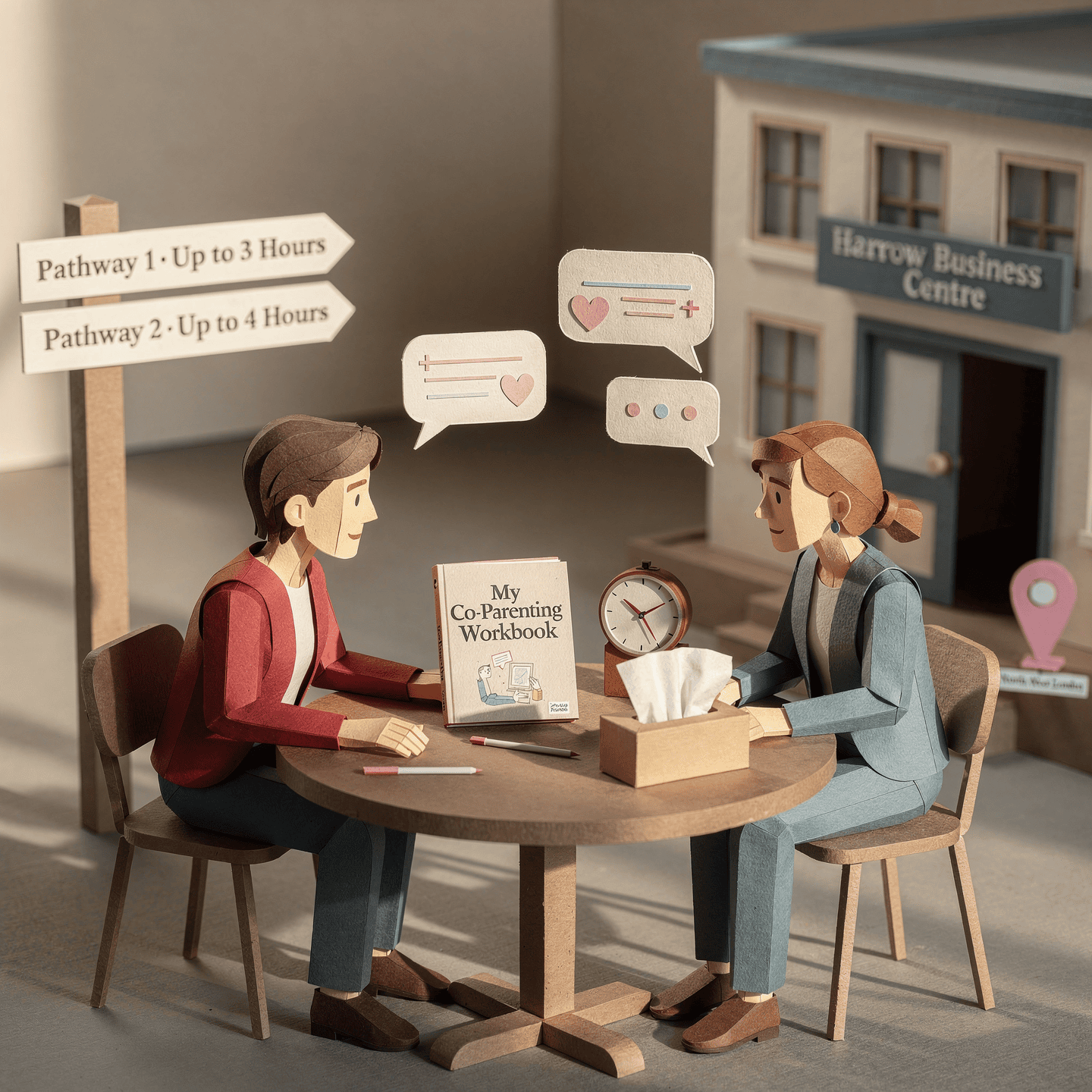
Workshop at a glance
Format
Location
Pathways
Facilitator
Includes
Not included
First step
Who this workshop is for
The separated parent who wants to do better — and does not know how to start
This workshop is written for a specific parent. They are not indifferent to their children's wellbeing. They are not trying to be difficult. They are exhausted by a situation that has become entrenched — and they want a structured space to think about what they can change from the inside of it.
You are a separated parent in North West London — in Harrow, Pinner, Northwood, Stanmore, Edgware, Wembley, Ruislip, or the surrounding area. You are navigating a co-parenting relationship that is difficult, conflicted, or simply not working in the way your children need it to. You may be in the early stages of separation or several years in. The conflict may be acute or it may be a low-level tension that never quite resolves. What you share with every parent who attends this workshop is that you want things to be better for your children — and that you are willing to examine what you can change yourself.
You cannot compel the other parent to come. You cannot compel them to change. What you can do is change how you approach the conversation — and when one person in a conflict system changes how they respond, the system itself changes. Children notice. The dynamic shifts. The ripple effects are real, even when they are not immediately visible.
"What stories will my children tell about their childhood? That question — not the legal outcome, not the custody arrangement — is the one worth keeping at the centre."
This workshop does not judge how you arrived where you are. It does not take sides. It does not tell you what to do. It provides a structured, confidential, one-to-one space in which you can examine your own patterns, build practical communication strategies, and leave with a clearer picture of what one step better might look like — for you, and for your children.

You want a starting point
Not a solution to everything — a clear, specific starting point. One thing changed that might create space for something better to develop.
A group session is the wrong setting. The other parent does not need to be there. You need somewhere you can be honest about where things actually are — without that honesty becoming part of a legal record.
Children feel conflict even when it is not conducted in front of them. The parent who can reduce their own contribution to that conflict is doing one of the most concrete things available to them for their children's wellbeing.
Every conversation becomes an argument
Not because you want it to — but because the patterns are entrenched, the triggers are reliable, and nobody has ever helped you examine how your own responses are contributing to the dynamic.
You need to think about a parenting plan
You know you need one but do not know where to start, what it covers, or how to approach it. The Pathway 2 session introduces the landscape before the formal process begins.
Why one parent
This workshop is for one parent — and that is the point
The one-parent format is not a limitation of this service. It is a feature of it — and understanding why matters.
You cannot compel the other parent to attend a workshop with you. In many cases, the parent who has found a facilitator will not be trusted by the other parent — which means bringing both parents together, even if it were possible, would often undermine the process before it began.
More fundamentally — you cannot change another person. You can only change how you respond to them. The most powerful thing available to a parent in a high-conflict co-parenting situation is the ability to interrupt their own patterns. To recognise the trigger before it fires. To pause. To ask whether their response serves their child. To choose differently.
That is internal work. It cannot be done in the presence of the other parent. It requires a confidential space — one where the parent can be honest about their own contribution to the conflict, without that honesty being used against them.

Mediation
Requires both parties. Focused on reaching specific practical agreements — child arrangements, financial matters. Does not primarily address communication patterns or the internal experience of the parents. Quick outcomes are the goal.
Therapy or counselling
Looks at the past. Addresses emotional history, trauma, and psychological patterns. Valuable — but not specifically designed to equip parents with practical, forward-looking strategies for co-parenting conversations.
Co-parenting workshop
One parent. Forward-looking. Focused entirely on what this parent can change — their patterns, their triggers, their communication approach, their goals. The facilitator understands both the legal landscape and the human one.
Your facilitator
Thirty years of practice. One consistent question.

No blame. No judgment.
The facilitator has no view on what happened in the relationship. The session is entirely forward-looking. How you arrived where you are is acknowledged — but the session focuses on where you want to go.
Client-led, not facilitator-led
The facilitator holds the structure. You provide everything in it. Your situation, your patterns, your goals, your communication strategies. Nothing is imposed from outside.
What is discussed in the session stays in the session. No report is produced. The workbook belongs to you. The session does not carry legal professional privilege, but it is held in complete professional confidence.
No promises
No specific outcome can be guaranteed from this or any workshop. What it offers is a structured space, practical tools, and a clearer picture of what one step better might look like. What you do with that is entirely your own.
Every question, every technique, every goal in the session returns to the child. Not as a pressure but as an orientation. The child's wellbeing is the shared goal that transcends the conflict between adults.
The two pathways
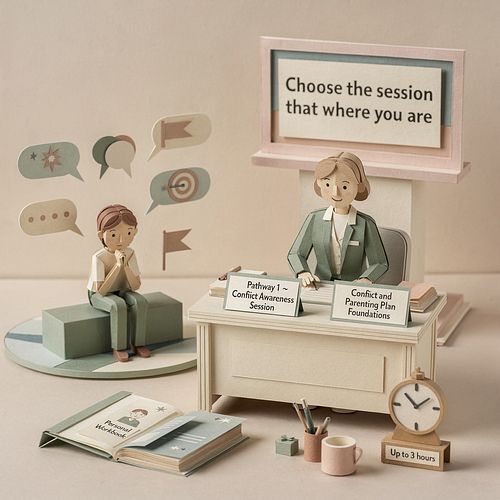
Choose the session that fits where you are
We recommend booking an initial consultation before a workshop — to understand your situation and confirm which pathway is the right fit. The consultation is chargeable and counts as the first step in the process.
Conflict Awareness Session
A structured introduction to your co-parenting conflict patterns — examining your specific triggers, learning mediation-derived communication techniques, and designing practical strategies for your specific situation. Closes with goals you have chosen yourself.
Duration: Up to 3 hours
Focus: Conflict awareness, triggers, communication strategies, goal setting
Includes: Personal workbook · Signposting to further support
Level: Introductory
Manadatory Initial consultation (up to 1 hour, £200 + VAT) before a workshop can be booked. This is a requirement to ascertain your needs, undertake initial compliance requirements, and to his is to ascertain which workshop would be more suitable for you. There is no obligation post the initial consultation to proceed with the workshop.
Conflict and Parenting Plan Foundations
Everything in Pathway 1, plus two further sections on parenting plan foundations — introducing the twelve areas the Cafcass parenting plan template covers, and helping you begin to think through what you would want to bring to a formal parenting plan conversation.
Pathway 2 is not Pathway 1 plus Pathway 1. It is Pathway 1 with two additional sections added. The total session is up to four hours.
Duration: Up to 4 hours (includes Pathway 1)
Focus: Conflict awareness + introductory parenting plan exploration
Including: Personal workbook · Cafcass territory map · Signposting
Level: Introductory — no legal drafting, no completed plan
Important: this session introduces the concept of a parenting plan and explores what it might contain. It does not produce a completed parenting plan. That requires the engagement of both parents and is a separate process.
Manadatory Initial consultation (up to 1 hour, £200 + VAT) before a workshop can be booked. This is a requirement to ascertain your needs, undertake initial compliance requirements, and to his is to ascertain which workshop would be more suitable for you. There is no obligation post the initial consultation to proceed with the workshop.
Workshops are not legal advice, mediation, counselling, or therapy. No legal advice is given. No legal drafting is undertaken. No representation is provided. No parenting plan is completed. No follow-up or ongoing work unless booked separately. The firm's compliance checks apply before booking, including payment. If you are experiencing domestic abuse, child welfare concerns, or are in a crisis situation, please see the signposting information in our Resources Page or contact the Police 999.
The workbook
Something to take away — something to return to
Every parent who attends a workshop receives a personal workbook — designed specifically for this session, and theirs to keep. It is not a handout. It is a structured thinking tool that runs in parallel with the session, so that what you think in the room has somewhere to land.
The workbook is yours. Its content is private. It is not shared with the facilitator, not submitted anywhere, and not part of any legal record. What you write in it is for you.
Most parents find it useful to return to the workbook in the weeks following the session — when a difficult conversation arises, when a trigger fires, or when they want to reconnect with the goals they set for themselves. It is designed to be used more than once.
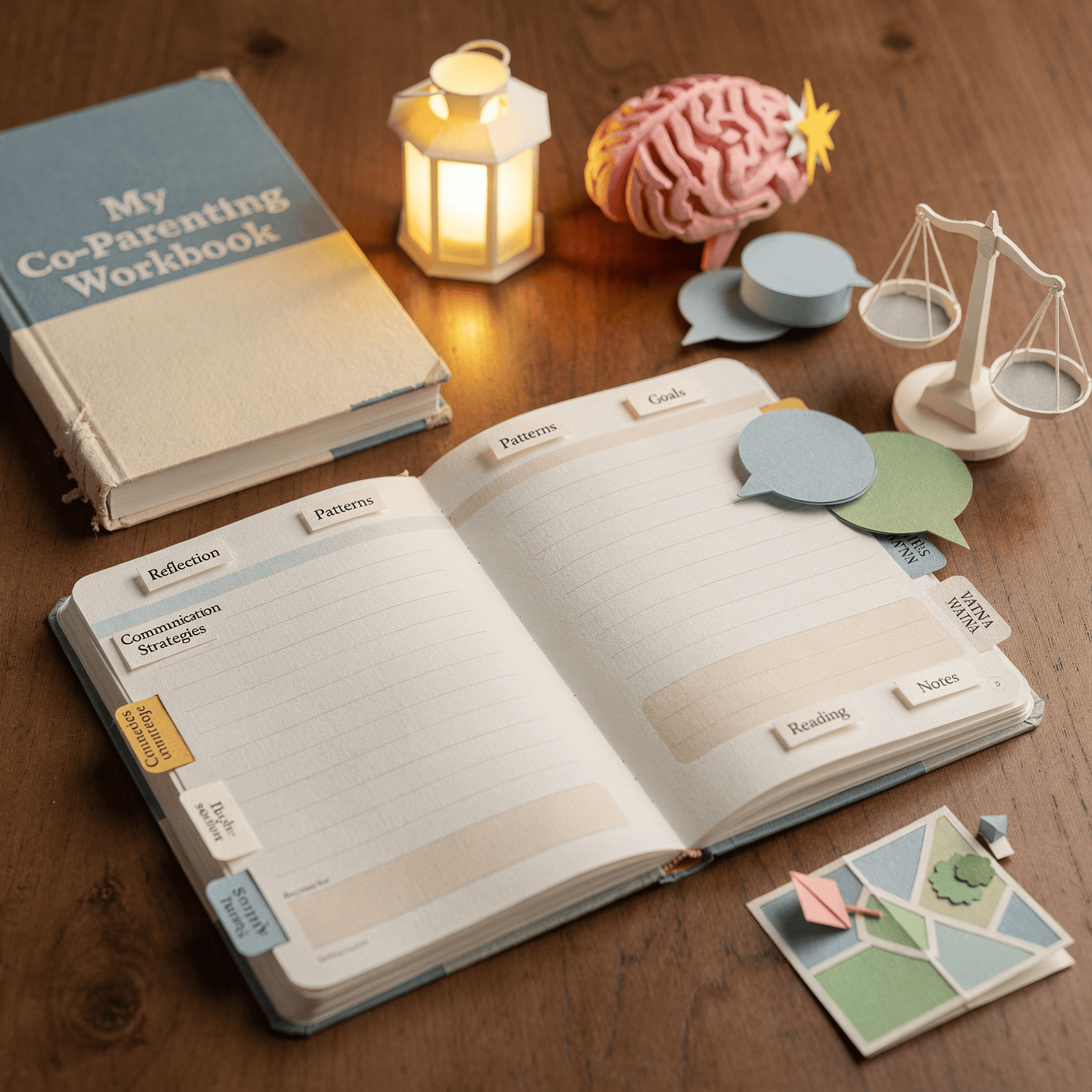
Eight structured sections following the session exactly — so you write as you think, not retrospectively
Reflection prompts as questions — invitations, not instructions. You write as much or as little as feels right
Key concepts explained — the amygdala hijack, BATNA and WATNA, the zone of possible agreement, the mediation techniques — so you can reference them after the session
Signposting to further support — nine services listed with contact details, for whatever you need beyond this workshop
Recommended reading — seven books selected specifically for their relevance to co-parenting communication, each with a personal framing from the facilitator
Two notes pages — for anything that came up in the session that did not fit the structured sections
Pathway 2 workbook includes all of the above plus additional sections on parenting plan foundations and the Cafcass twelve-area territory map
Parents this workshop recognises
Situations the workshop is designed for
These are fictional illustrations. They are offered so that you can recognise your own position.
The parent who can see the pattern but cannot seem to interrupt it
A parent in North West London — two years post-separation, sharing care of two primary-school-age children. Every handover is tense. Every conversation about the children becomes an argument. They know their own triggers. They know that the argument is, at least partly, about the adult relationship that ended. What they do not have is a structured space to examine what they can change about how they show up to those conversations.

The workshop provides exactly that space — one parent exams the specific triggers, practising the pause, designing communication protocols that reduce the number of direct conversations needed initially, and they set a small, specific goal that they feel is genuinely achievable within the next seven days.
The parent at the beginning who wants to build something workable from the start
A parent in Pinner — newly separated, one child aged four. The separation is recent. The conflict is not yet entrenched. They know from what they have observed in other separated families that co-parenting conflict tends to compound over time if it is not addressed early. They want to build communication protocols, understand their own triggers, and approach the parenting relationship with a clear structure from the beginning.
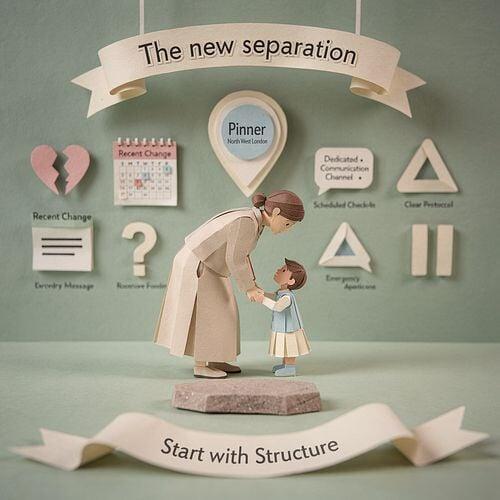
The workshop at this stage can assist with prevention as much as remediation. Helping to build the less confrontational habits early — the scheduled check-in, the dedicated parenting communication channel, the clear emergency protocol — creates the structure that makes every subsequent conversation easier.
The parent who needs to understand the parenting plan territory before formal discussions begin
A parent in Stanmore — their child arrangements are managed informally. The other parent has indicated they want to formalise things into a parenting plan. This parent wants to understand what a parenting plan actually covers — what the twelve areas of the Cafcass template are, what they would want in relation to each one, and how to approach a formal conversation without being taken by surprise by the breadth of what it needs to address.
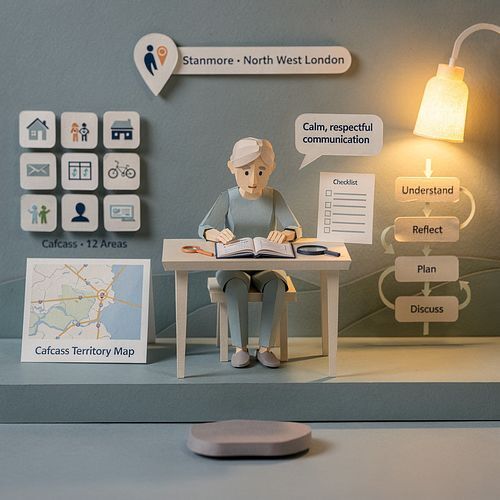
The Pathway 2 session provides exactly this preparation — introducing the Cafcass territory map, exploring the areas that matter most to this parent, and helping them have a clearer picture of what they want and why.
The parent who has tried everything and is looking for something different
A parent in Harrow — five years post-separation, children now in secondary school. They have been through solicitors, through mediation, through a period of court proceedings. The legal matters are resolved. The co-parenting relationship is not. They are exhausted. They do not want to go back to court. They do not want more advice about their rights. They want a structured space to think about what they can change — in how they approach the conversations, in how they respond to the triggers, in what they are modelling for their children.

For a parent in this position, the workshop offers something that the legal process cannot — a focus entirely on the internal work. Not what the other parent should do differently. What this parent can do differently. That shift in orientation is, in itself, often the most significant thing a session produces.
These illustrations are fictional. They do not represent specific clients. No guarantee of a similar result should be inferred.
Opening doors to possibility
Not a promise. A possibility.
No specific outcome can be guaranteed from a workshop.
Possibility: A clearer picture of their own contribution
The parent who arrives uncertain of what they can actually change often leaves with a more specific picture — of their own triggers, their own patterns, and the specific moments where a different response might produce a different result.
Possibility: Practical tools they can use immediately
Not theory. Not general advice. Specific communication strategies designed in the session around their specific situation — the app, the dedicated email, the scheduled check-in, the pause and the orienting question.
Possibility: A starting point that feels genuinely achievable
Not transformation. One step better. One specific, small, achievable change that the parent has chosen for themselves — grounded in their own situation, their own goals, their own understanding of what their child most needs from them right now.
These possibilities are not guarantees of any specific outcome, which depends entirely on individual circumstances, the decisions made following the session, and factors entirely outside this practice's control.

Begin
A consultation first. Everything else follows from there.
A one-hour initial consultation — to understand your situation, confirm whether a workshop is the right fit, and discuss which pathway makes sense for where you are. No pressure to proceed.
No obligation to commit to more than the conversation itself.

Quick Contact -
We serve you
We support families in North West London and surrounding areas, from Harrow to Watford, Brent Cross to Kilburn, West Hampstead to Mill Hill, Edgware, and Colindale etc
Call Us: 020 4578 4684
