
Client Persona Workshop · Self-Employed and Small Business · London
Spending energy reaching the wrong people. There is a different way to approach this.
Most self-employed people and small business owners started with a specific person in mind. Over time, the operational demands of running a business quietly replaced that clarity with a general effort to reach anyone who might be interested. The communication became broader. The right people became harder to reach. The marketing began to work less well than it should.
A three-hour, one-to-one workshop for self-employed people and small service businesses in London. Not a template exercise. A structured conversation that draws on what you already know about the people you most want to serve, and helps you say it clearly enough to act on it.

Initial consultation · Fixed fee · No obligation beyond the initial conversation
One-to-one client persona workshop · In person · Up to three hours · Fixed Fee
Harrow Business Centre · North Harrow · London
Format
Duration
Location
Who it is for
You leave with
Initial Consultation
An initial consultation is recommended before booking to discuss your needs first and which of our workshops would be most suitable. An initial consultation does not require you to commit to future services.
Fee
Natural next step
The problem
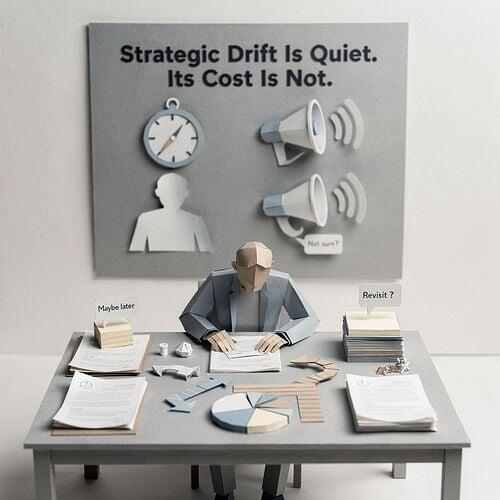
Strategic drift is quiet. Its cost is not.
The problem has a name. Strategic drift is what happens when a business that began with a clear sense of who it was for gradually loses that clarity under the weight of doing the work. It is not a failure of ambition. It is a very normal consequence of running a practice. And it is expensive.
You started this business with a specific person in mind. You had seen a need. You had felt the frustration of that need going unmet. The person you were trying to serve was real and specific, and the work you were going to do for them was purposeful. Then the clients arrived, the operational demands multiplied, and the question of who you were actually speaking to got quietly deferred.
The communication became broader. The website began to describe your services to everyone and speak to no one in particular. The proposals started from scratch each time because there was no consistent thread. The business development felt scattered because you were not quite sure where your ideal clients actually were or what would make them take notice.
When you try to speak to everyone, your message becomes diluted. The people you most want to reach stop recognising themselves in what you are offering. The marketing does more work and produces less return. Not because the service is wrong. Because the direction is imprecise.
This is the problem the session addresses. It does not ask you to invent your ideal client. It asks you to rediscover the one you already had in mind. The knowledge already exists. The session draws it out.
What strategic drift costs, specifically
Website copy that describes your services accurately but speaks to no specific person's situation. Visitors recognise the category and move on.
Business development that feels scattered because you are not sure where your ideal clients are, what they read, or what would make them take notice.
Pricing conversations that feel uncertain because you have not clearly connected your fee to the specific value you provide to a specific person with a specific problem.
Proposals that start from scratch each time because there is no consistent thread. No single clear picture of the person you are writing for.
Content that reaches the wrong people. Hours spent producing material that does not compound into anything.
A growing sense that you are working hard but not quite reaching the people who would value what you do most. Not because the work is not good. Because the message is not specific enough.
What becomes possible
Not another year of communication that almost reaches the right people.
We cannot promise that this session will change your business. No honest service can make that promise.
What we can offer is the possibility that clarity changes the quality of every decision that follows it.
That possibility has genuine value. It is worth understanding what it looks like.
Most small business owners spend years producing content for people who are not quite right, writing proposals that go nowhere because they were written for the wrong version of the client, and attending networking events that produce nothing useful because they cannot describe their ideal client clearly enough for someone else to recognise them. That accumulated cost is real. It rarely arrives as a single obvious failure. It compounds quietly, over time, as the difference between a practice that grows efficiently and one that works harder than it should for slower results than it deserves.
The session is not a guaranteed solution to any of those things. What it offers is a starting point: a clearer, more specific picture of who you are for and what they are looking for. That clarity does not guarantee anything. But it changes the quality of every communication decision that follows. The website conversation. The proposal conversation. The pricing conversation. The business development conversation. All of them become more grounded when they are addressed to a specific person rather than a general audience.
You already know more about your ideal client than you have been able to use. The session organises that knowledge into a form you can act on. That is the possibility this workshop opens.
No specific outcome can be guaranteed. The clarity the session produces depends on the knowledge you bring to it and the action you take after it.

Communication that speaks to someone specific
Not a rewrite of your website. A clearer picture of who you are writing it for, and what that person needs to see before they feel confident enough to get in touch.
Business development with a direction
When you know where your ideal clients actually are and what tips the balance in a decision to engage, the choices about where to invest your energy become clearer. Not obvious. Clearer.
Pricing conversations that are grounded
Pricing a service confidently requires understanding the value it provides to a specific person with a specific problem. Generic pricing for a general audience produces uncertain conversations. Specific pricing for a specific client does not.
A foundation for everything that follows
Persona work is the starting point for the storytelling workshop, for content strategy, for pricing decisions, for business development choices. It is the right first step for any small business that wants its communication to do more work than it is currently doing.
Learning
Learning who the client actually is.
The knowledge already exists
The session does not ask you to invent your ideal client. It asks you to describe the one you already know. The knowledge is in your client conversations, your best engagements, your most rewarding work. The session draws it out.
One or two personas, not twenty
The most common mistake in persona work is producing too many. The session focuses on one or two client types at most. A single vivid, specific persona that actually guides decisions is worth more than a dozen general profiles that do not.
Practical, not theoretical
The output is a completed workbook with specific, usable content. Not an academic exercise or a slide deck. The five sections of the workbook correspond to the five questions of the session. What you write in the room is what you take home and use.
Your interest is the only one in the room
This session has no agenda beyond helping you leave with a clearer picture of your ideal client. It does not sell you into further services. It does not produce a report for anyone other than you. The workbook belongs to you. What happens next is entirely your decision.
A foundation, not a destination
Client persona work is the starting point. It is the right first step for any small business that wants its communication to do more work. Once you know who you are speaking to, the story you tell them, the price you charge, and the places you show up all become clearer decisions.

This session does not produce the answers on your behalf. The knowledge of your ideal client lives in you, not in any framework or methodology. The session provides the structure and the questions. You provide everything else. What you leave with is your own thinking, organised and made usable. That is the only honest description of what this session offers.
Your facilitator
Learning who the client actually is
The moment when you realise that you have been communicating to a general version of your client rather than the specific person you started out trying to serve is not dramatic. It is quiet. It arrives as a growing sense that the work is good but the reach is somehow not quite right.
The questions I ask in this session are the same questions I have had to ask myself, repeatedly, across a long career of working with individuals and businesses who had problems they needed help thinking through.
What is this person actually carrying when they arrive? What do they need that they cannot always articulate?
I bring that experience to the session. But the session is not about what I know. It is about what you know.
The knowledge of your ideal client already exists in you. It is in your best client conversations, your most rewarding engagements, your clearest sense of which work feels aligned and which does not. My job is to help you draw it out and make it specific enough to use. That is all this session does. And that is enough.

The session does not ask you to invent your ideal client. It asks you to describe the one you already know. The knowledge is in your client conversations, your best engagements, your most rewarding work. The session draws it out.
One or two personas, not twenty
The most common mistake in persona work is producing too many. The session focuses on one or two client types at most. A single vivid, specific persona that actually guides decisions is worth more than a dozen general profiles that do not.
Practical, not theoretical
The output is a completed workbook with specific, usable content. Not an academic exercise or a slide deck. The five sections of the workbook correspond to the five questions of the session. What you write in the room is what you take home and use.
Your interest is the only one in the room
This session has no agenda beyond helping you leave with a clearer picture of your ideal client. It does not sell you into further services. It does not produce a report for anyone other than you. The workbook belongs to you. What happens next is entirely your decision.
Client persona work is the starting point. It is the right first step for any small business that wants its communication to do more work. Once you know who you are speaking to, the story you tell them, the price you charge, and the places you show up all become clearer decisions.
Is this for someone like me?
The small business owners this session most recognises
Illustrations of the situations this workshop addresses. They are offered so you can recognise your own position.
The consultant whose referrals are strong but whose website is not doing the same work
A consultant in North West London, eight years in practice, excellent at the work. The referrals that come in are consistent and strong. The enquiries from the website are patchy. The proposals that go out win sometimes and lose without a clear pattern. When asked who their ideal client is, the answer is thoughtful and accurate and could describe approximately forty per cent of London businesses.

The specialist who started with one type of client in mind and slowly began serving anyone
An independent HR consultant who set up two years ago specifically to serve small creative businesses in London. That was the vision. The client base has become more varied. Some clients feel energising and aligned. Others feel draining. The ones that feel right share something in common that the consultant has not yet articulated clearly enough to use as a filter. The marketing is aimed at everyone with a people problem.

The business owner who wants to move toward a different client and does not know how to describe them
A bookkeeper in London, five years in practice, who wants to stop working with clients who treat the relationship as purely transactional and start working with business owners who want a strategic financial thinking partner. The current marketing reaches the former. The aspiration is the latter. The difference between the two is not yet described anywhere in the business's communication.

The multi-skilled operator who can do many things and is not sure which to put at the front
A marketing consultant who offers strategy, content, social media and brand identity. The range is genuine and the quality is high. The problem is that a list of capabilities is not a proposition for any specific person. The enquiries that come in are for the least strategic element. The work that feels most rewarding is the most strategic. The two things are not yet connected in how the business presents itself.
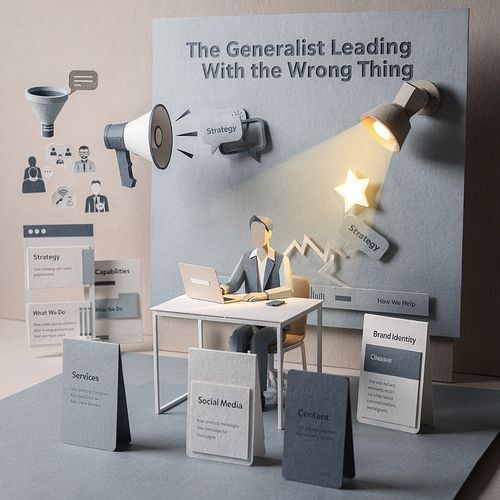
These illustrations are composite and anonymised. They do not represent specific clients. No specific outcome should be inferred.
What the three hours involve
Five questions. The answers are already in you.
The session works through six distinct layers of examination, each surfacing something the previous one does not. It is not a lecture and it is not a programme. It is a facilitated conversation that draws on what you already know about your practice and your clients.
You will focus on one or two specific client types during the session. Not an exhaustive list of everyone you have ever served. The one or two people who, when you picture them clearly, make your work feel like it has a specific purpose. The session builds a detailed picture of each of them by working through five questions in sequence.
The beginning story
Who did you have in mind when you started? What did you understand about their situation? What problem were you trying to solve for them? This question reconnects you with the clarity you had before the operational demands of the business took over.
What triggers them
What has to happen in your ideal client's life or business before they start looking for what you offer? Not what they need in theory. What has to change, break or become urgent enough that they act. Understanding the trigger tells you when your ideal client is receptive and what to say when they are.
What they want
Not what your service does. What outcome does your ideal client hope for in their own terms? The session examines three dimensions of what your ideal client is looking for: the functional job (what they need to get done), the emotional job (how they want to feel while you are doing it), and the social job (how they want to be perceived as a result of choosing you). Understanding all three changes what your communication says and how it lands
What stops them
What makes your ideal client hesitate, doubt, or choose someone else? Understanding the perceived barriers to engagement is often more useful than understanding the reasons they would engage. The barriers tell you exactly what your communication needs to address before they will feel confident enough to get in touch.
How they find you
Where does your ideal client look when they decide they need help? Who do they ask? What do they read? What does the comparison process look like and what tips the balance when they are choosing between two providers who seem broadly similar? This question shapes your business development decisions directly.
What this session is not
Not a done-for-you service
Not a guarantee of specific business outcomes
Not a substitute for market research
Not a marketing strategy
The clarity comes from your knowledge. The session provides the structure.

The intellectual architecture
Six frameworks. Layered so each one adds what the others do not.
The session works through six distinct dimensions of the same question. Each layer of examination reveals something the previous layer did not. The questions are not generic. They are grounded in a professional understanding of how small service businesses actually work and why the right clients choose one provider over another.
What job are they actually hiring you to do?
Most professionals answer this at the surface level: they hire me to produce the accounts, draft the contract, manage the project. The session goes deeper. What does the client need to feel while you are doing it? How do they want to be seen by others as a result of choosing you? The decision your ideal client makes is rarely about the functional task. Understanding all three dimensions changes what your communication needs to say.

Who is it actually for?
The instinct to reach everyone is not ambition. It is the absence of a clear answer to this question. The session asks you to identify not your entire client base but the specific kind of person for whom you are genuinely the obvious choice. That specificity is not a constraint. It is what makes the communication work. A message written for everyone reaches no one in particular.

What does your ideal client most deeply value?
Demographics describe who your clients are. Their behaviour describes what they have done. Their values explain why they make the decisions they make and why they stay with providers who understand them. The session identifies the one or two values that most consistently drive your ideal client's choices. When your communication speaks to those values, you are no longer competing on features or price. You are speaking to something that does not change.

What is the story of their decision to engage with you?
A client profile is not a buying decision. The session maps the actual decision your ideal client makes: what has to happen before they start looking, what they hope to achieve in their own terms, what makes them hesitate, where they look when they decide to act, and what tips the final balance when they choose between two providers who appear similar. That story contains the communication your website and your proposals need to carry.

In what context does your value become obvious?
The same professional, in the wrong context, is invisible. In the right context, they are the obvious choice. The session examines how your ideal client thinks about the alternatives available to them and what makes you distinctively different from those alternatives in a way that matters to them specifically. Context determines perceived value. The session helps you identify and occupy the right context.

What does choosing you allow your ideal client to believe about themselves?
This is the deepest question in the session and often the most surprising one. People do not buy products or services. They hire them to make a statement about who they are. The client who chooses you is not just solving a problem. They are making a choice that says something about their values, their standards, and how they want to be seen. When you know what that choice says, you know what your communication needs to express. Everything else follows from there.

These six dimensions of examination are the structure the session holds. You bring the knowledge. The session brings the questions that help you examine it with sufficient precision to make it usable. The conclusions are yours. The thinking is yours.
Where this leads
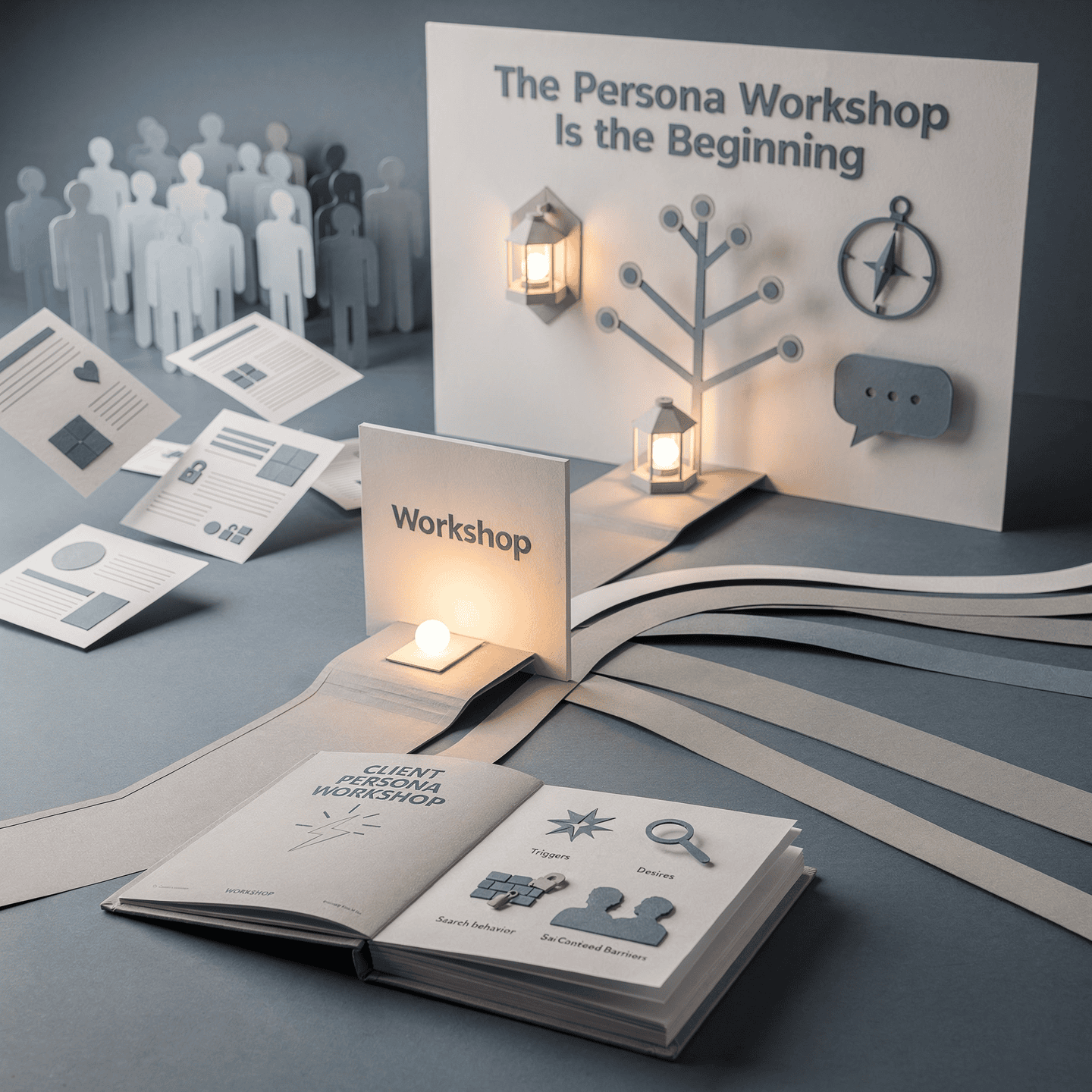
The persona workshop is the beginning. Here is what typically follows.
Once you know specifically who you are speaking to, the next questions become clearer decisions.
The beginning
Client Persona Workshop
Who are you actually speaking to? What triggers them, what do they want, what stops them, and how do they find you? This session produces a specific, usable picture of one or two ideal clients that guides everything that follows. Up to three hours, one-to-one, with a workbook you keep.
Most people begin here. The clarity this session produces changes the quality of every communication decision that follows.
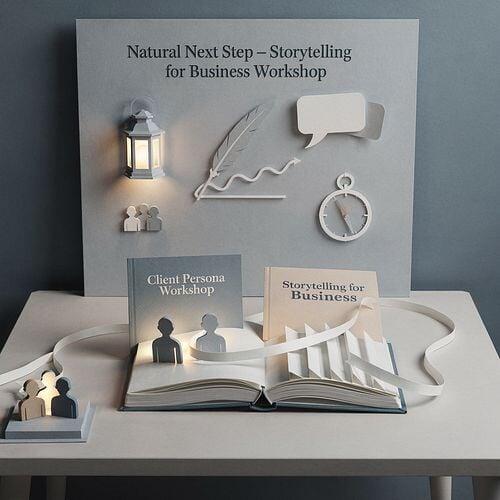
Storytelling for Business Workshop
Once you know who you are speaking to, you can build a story that speaks to them. The storytelling workshop takes your persona clarity as its starting point and helps you structure a business narrative that resonates with the right people and carries the right message consistently across everything you produce.
This workshop makes most sense after the persona session. The story you build here is grounded in the specific person you identified there.
Answers
The questions business owners ask before booking
Begin here
A consultation first. Everything else follows from there.
A short conversation about your business, your clients, and whether this workshop is the right starting point for where you are now. No obligation beyond the conversation itself.
No specific business outcome can be guaranteed from this or any of our workshops. The session provides structure and facilitation.
The knowledge, and what you do with it, is yours.
