
An all-female criminal enterprise operating from Victorian London to the 1950s. Three stages of money laundering. Eighty years without a single compliance check.
AML · Dark Tales · London Criminal History
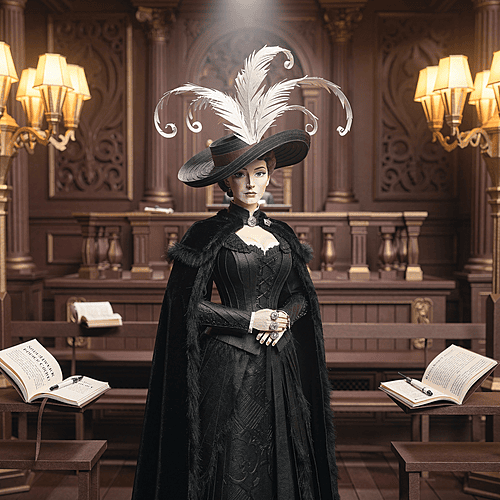
She appeared in the dock at Southwark Police Court in a splendid black velvet cloak trimmed with fur, over a black silk dress, her head adorned by a broad-brimmed Rembrandt hat boasting five ostrich feathers. On her fingers glittered seven diamond rings, valued by one journalist at over three hundred pounds, at a time when a working man's wage was less than two pounds a week.
Mary Carr, Queen of the Forty Thieves, was about to be sentenced for kidnapping. The source of the rings on her fingers, the fur on her cloak, the silk of her dress nobody asked.
The Forty Elephants were an all-female criminal enterprise based in the Elephant and Castle area of south London. Active from at least the 1870s and by some accounts considerably earlier, the gang operated under a succession of leaders known as queens until the 1950s. Their primary method was organised shoplifting from high-end stores in London's West End and, in their later years, from major retail centres across England. Their secondary methods included blackmail, fraudulent references to obtain domestic employment before looting their employers' homes, and an extensive network for receiving and distributing stolen goods.
This blog draws directly on Brian McDonald's book Alice Diamond and the Forty Elephants (Milo Books, 2015), which is the authoritative published account. McDonald researched the book through police reports, court records, contemporary newspaper archives, unpublished family histories, and the notes of crime journalist Stanley Firmin and gang associate Dan Johnston. Where specific historical claims are made they are referenced to that source. Secondary sources used include the London Museum's published account and Historic UK. A Thousand Blows, the Disney+ drama created by Steven Knight (2025), is drama inspired by the history rather than a documentary account. It is not used as a source here.
This is another historical tale through the lens of modern day AML. This is done to provide an accessible illustration of application of old facts and factors into the modern day compliance framework, it presents less friction to understanding key concepts.
The regulatory framework applied is the Proceeds of Crime Act 2002 (POCA 2002), the Money Laundering, Terrorist Financing and Transfer of Funds (Information on the Payer) Regulations 2017 (MLR 2017), and the LSAG Anti-Money Laundering Guidance for the Legal Sector 2025 (LSAG 2025, in force from 23 April 2025). The three-stage conceptual model of placement, layering and integration is the FATF framework. It is not terminology that appears in the MLR 2017 itself, and is applied here as an interpretive structure.
The FATF Three-Stage Model applied to 1870s to 1950s London
The Elephants Ran All Three Stages Simultanously. Nobody Noticed for Eighty Years
The FATF framework identifies three stages in the movement of criminal proceeds into the legitimate economy. The Forty Elephants did not know these terms. But their operation anticipated each one.
The criminal property is generated
Furs, silks, jewellery, leather goods taken from the high-end stores of the West End. Each item is criminal property within the meaning of Section 340 of POCA 2002 from the moment it leaves the store. The "clouting" methods clothing modified with hidden pockets, underskirts sewn into large repositories, muffs and hats adapted for concealment are the mechanics of placement.
McDonald records that the women "rarely wore what they stole, possibly to avoid the items being recognised, but bought high fashion from the proceeds of their larcenies." The criminal property enters circulation at the point of theft and moves immediately to the layering stage.

Modern equivalent: cash or assets from criminal activity entering the financial system at the point of generation.
The goods move through the fence network
McDonald documents the distribution network in detail. Furs went to East End furriers who removed labels and remodelled merchandise so it could not be identified. Jewellery and antiques went to Caledonian Market in Islington, which before 1995 operated under the ancient law of market ouvert, allowing ownership of goods to transfer between sunrise and sunset without questions as to provenance. Home goods went to street markets. Each transaction added distance between the criminal property and its origin.
The most sophisticated layering element: a woman receiver in the Elephant and Castle area who maintained secret cupboards and double floors holding, as crime journalist Stanley Firmin recorded, "ledgers of transactions entered as legitimate purchases with fake names and addresses." McDonald identifies her as Ada Johnston. The documentation was created specifically to defeat inquiry.
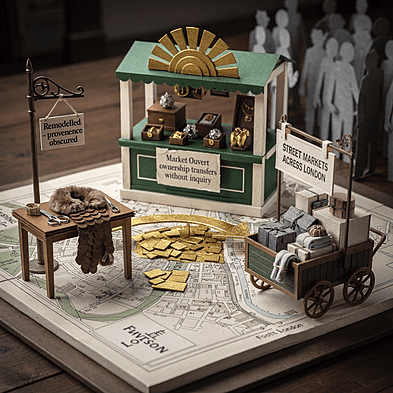
Modern equivalent: multiple transfers designed to obscure the origin of funds, with false documentation to support the appearance of legitimate activity.
The proceeds re-enter the legitimate economy
Alice Diamond wore furs and diamond rings. She drove fast cars. She moved through Soho's fashionable nightclub scene. The women "partied hard in the streets where they grew up. They went to the West End dressed in highest fashion: gorgeous fur coats, tailored suits and expensive jewellery." McDonald records this directly.
The proceeds of the criminal enterprise, having passed through the fence network, were spent in ways indistinguishable from legitimate earnings. This is the integration stage. It is also where the source of wealth question arises and where, in the absence of any regulated professional ever asking it, it went permanently unanswered.
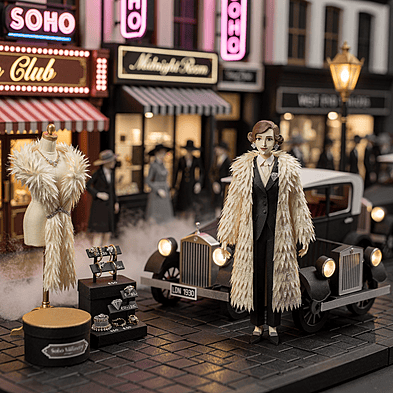
Modern equivalent: criminal proceeds reintroduced into the economy through luxury spending, property, or investment that cannot be traced to the underlying crime.
Chapter One · The Carr Era
The First Queen The Foundation of the Enterprise
Mary Carr's convictions began in 1876, when she was cautioned at Westminster as a fourteen-year-old for stealing from shops. She was described in a 1900 police report as "one of the most dangerous women in the metropolis and Queen of the Forty Thieves" and as "a good-looking woman who had modelled for important artists but who led a gang of obedient teenage females." She married Thomas Crane on 3 September 1888 and operated from homes in Southwark. Her notoriety was sufficient to inspire a West End theatre production, The Worst Woman in London, which opened at the Standard Theatre in 1899.
What McDonald's primary research establishes about the Carr era is important for historical accuracy. The gang targeted "large stores of the West End of London." The specific stores that McDonald names in the context of the gang's operations during this general period before the grand Edwardian rebuilding of the major department stores include Whiteleys in Bayswater, which had been trading since 1863, and Army and Navy Stores. Harrods is named in McDonald's account in a 1908 context (a sable muff stolen, with the store described as "attaching considerable importance to the arrests"). Selfridges did not open until 1909. The rebuilt Debenham and Freebody Wigmore Street premises were completed in 1908. These are Alice Diamond era targets.
Carr was arrested in 1896 for the kidnapping of a six-year-old boy from Epsom Races and sentenced to three years' penal servitude. After her release she immediately resumed fencing stolen goods. In 1900, as Mary Crane, she was convicted of receiving and sentenced to two years in Wormwood Scrubs. McDonald records she "gave her age as twenty-nine but police said she was actually thirty-seven." She died in 1924.
Character One
Mary Carr
McDonald records that Mary Carr "stunned the magistrates at Southwark Police Court by appearing in a splendid black velvet cloak, trimmed with fur, over a black silk dress, her head adorned by a broad-brimmed Rembrandt hat boasting five ostrich feathers. On her fingers glittered seven diamond rings, valued by one journalist at over three hundred pounds, at a time when a working man's wage was less than two pounds a week."
She was a flower seller by documented trade. The gap between what she could legitimately earn and what she visibly possessed is the source of wealth problem made human.
Source of Wealth and the Assumption of Legitimacy
LSAG 2025 section 6.17 distinguishes between source of funds (where the specific money used in a transaction came from) and source of wealth (how the person accumulated their overall financial position). For higher-risk clients, both must be asked and both must be evidenced.
Mary Carr's source of wealth was entirely unexplained by her documented income. She worked as a flower seller and an artists' model. She presented at court in fur and diamonds. No regulated professional ever asked the gap between those two things to be explained. The Unexplained Wealth Order provisions of the Criminal Finances Act 2017 which allow the National Crime Agency to require a person who holds property disproportionate to their known income to explain the source of that wealth exist because this gap is precisely what the modern framework requires to be addressed. A UWO application requires that the person holds property exceeding fifty thousand pounds in value and that there are reasonable grounds to suspect the property derives from serious crime. Mary Carr's seven diamond rings, valued at over three hundred pounds in the 1890s, would have satisfied the threshold with ease.
The assumption of legitimacy she exploited in court the fur cloak, the silk dress, the ostrich feathers is the same tool every sophisticated financial criminal deploys. LSAG 2025 Chapter 4 requires professional scepticism: the discipline of evaluating evidence rather than presentation. Presentation is not evidence. Mary Carr demonstrated this more vividly than any modern compliance training module could manage.
LSAG 2025 section 6.17 · Criminal Finances Act 2017 Section 1 · LSAG 2025 Chapter 4 · POCA 2002 Section 340

Chapter Two · The Diamond Era
Alice Diamond The Industrial Scale of the Criminal Corporation
Born 1896, Lambeth Workhouse Infirmary · First mentioned in police records 1914-15 · Led the gang through the 1920s and 1930s · Died 1952 · Source: McDonald, pp. 101-210
Alice Diamond first appears in McDonald's records in December 1914, when four young women entered a hat shop on Oxford Street and stole hats, scarves and a gown. Three were arrested. One, who had taken a gown from the back of the shop during the confusion, escaped. Police records named her as Alice Diamond. By January 1915, she appeared at London Sessions charged with stealing from warehouses and was already described by police as "a skilful thief known as the Queen of the Forty Thieves, the head of a gang of robbers that congregated at Borough."
Under Alice Diamond's leadership the gang became what McDonald describes as operating "like a business corporation with a strict code of conduct." The gang was divided into cells McDonald records a "typical cell of four" each allocated to specific operations. There were formal rules of conduct, documented in what McDonald refers to as the "Hoister's Code" from Dan Johnston's unpublished notes. No drinking before a raid. No stealing from one another. Absolute loyalty enforced, when necessary, with violence.
The stores specifically documented by McDonald as targets in the Diamond era include: Selfridges on Oxford Street; D.H. Evans in Oxford Street; Debenham and Freebody; Harrods; Whiteleys; Bon Marche in Brixton; Swan and Edgar at Piccadilly Circus; and stores across Birmingham, Manchester, Leeds, Brighton, Cheltenham and other major towns. McDonald records one London store estimating losses of up to seven thousand pounds in goods over a year. The gang also used the Selfridges staff in October 1928, two shop assistants at Selfridges pleaded guilty to stealing goods from their employer to hand to "a gang of women terrorists" after being blackmailed into wholesale theft.

"The Queen of the Forty Thieves the most powerfully organised syndicate of shoplifters, pickpockets and blackmailers that was ever controlled by a woman had her court at the Elephant."
Daily Express, quoted in academic research published in the Women's History Review (2025), referring to Alice Diamond.
Alice Diamond
Alice Diamond is the integration stage made visible. McDonald documents her lifestyle directly: "gorgeous fur coats, tailored suits and expensive jewellery." She drove fast cars. She was a prominent figure in Soho's interwar nightclub scene. She was born in the Lambeth Workhouse Infirmary in 1896. Between those two facts lies a source of wealth question that was never asked by any regulated professional because no regulated professional was ever involved.
Source of Wealth, Complex Structures and Ongoing Monitoring
McDonald records the gang's operational structure in detail: cells of approximately four women, each allocated a specific area, each operating without visibility of the whole picture. This is the beneficial ownership opacity problem applied to an operational enterprise. No individual cell member could identify the directing mind above them. The directing mind controlled the distribution of proceeds through the fence network and did not appear in any visible record of any individual transaction.
Regulation 33(6)(a)(vi) of the MLR 2017 identifies corporate structures that are unusual or excessively complex given the nature of the company's business as a factor requiring consideration when assessing whether enhanced due diligence is needed.
The cell structure of the Forty Elephants multiple teams operating simultaneously across multiple locations, with a distribution network waiting to receive the goods and a directing mind sitting above the visible layer is the operational equivalent of a complex corporate structure with no obvious commercial rationale. The question a modern MLRO would ask is the same question nobody asked of the Forty Elephants: why is this so complicated, and who actually controls it?
Regulation 28(11) of the MLR 2017 requires ongoing monitoring throughout a business relationship, including scrutinising transactions for consistency with the firm's knowledge of the client and their profile. Alice Diamond led the gang from approximately 1915 to the 1930s.
A risk assessment appropriate to any one year of that period would have been wholly inadequate to the next, as the enterprise scaled, professionalised, extended geographically, and developed new revenue streams including blackmail and warehouse theft.
LSAG 2025 section 6.17 · Regulation 28(11) MLR 2017 · Regulation 33(6)(a)(vi) MLR 2017 · POCA 2002 Section 340

Ada Johnston and the Ledgers
The Fence Who Created False Records and What the Modern Equivalent Looks Like
McDonald's account of the fence network is one of the most instructive elements of the primary record for AML purposes. He draws directly on crime journalist Stanley Firmin's published account, Scotland Yard: The Inside Story, quoting Firmin's description of inspecting premises at the heart of the Elephant and Castle operation:
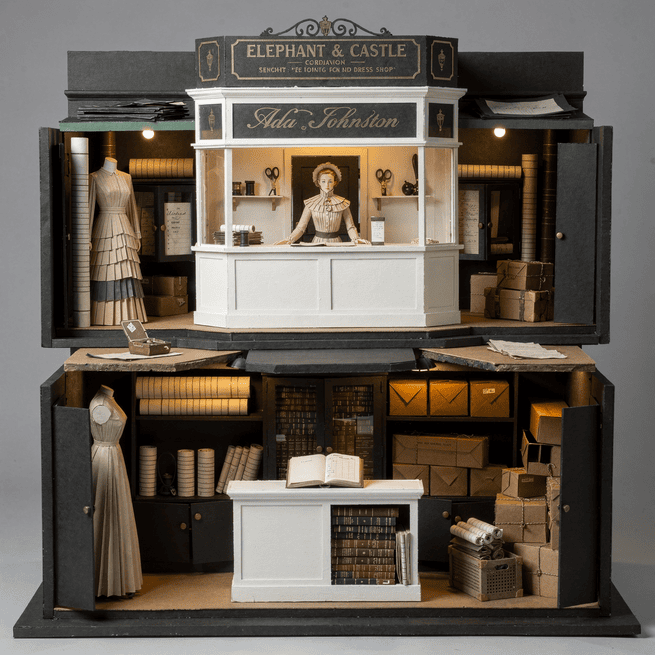
"Some little time ago in the Elephant and Castle area, I inspected some premises which were at the heart of a woman receiver who had just been arrested. The place was ostensibly a dress shop and the woman had built up quite a little reputation in the neighbourhood for her quiet way. For years she had been acting as receiver for no fewer than five notorious gangs of thieves. Thousands of pounds worth of stolen goods was found in her premises. Secret cupboards and double floors held ledgers of transactions entered as legitimate purchases with fake names and addresses."
Crime journalist Stanley Firmin, Scotland Yard: The Inside Story, quoted in Brian McDonald, Alice Diamond and the Forty Elephants (Milo Books, 2015), p. 76. McDonald identifies the receiver as Ada Johnston.
Documents Collected But Not Analysed A Pattern That Persists
The ledgers are perhaps the most instructive detail in the entire Forty Elephants record. Not because they were sophisticated forgeries. Because they were precisely the kind of documentation that satisfies a surface-level inquiry while concealing the underlying reality. The ledgers showed purchasing activity. They did not show the provenance of the goods recorded as purchased. The documentation was there. The analysis was not.
The SRA's 2024-25 AML annual report identified source of funds as one of the most consistently deficient areas in law firm compliance. The specific finding was that source of funds documents were "often collected but not analysed." A bank statement showing a balance is not evidence of source of funds. A document recording a purchase is not evidence that the purchase was legitimate. The obligation under LSAG 2025 section 6.17.2.1 is to evidence the underlying economic origin, not merely to file whatever documentation the client provides.
Any person who assisted in the acquisition, retention, use or control of criminal property knowing or suspecting it to be criminal property commits an offence under Section 328 of POCA 2002. The fences in the Forty Elephants' network were not simply market traders. They were, in modern legal terms, potentially concerned in arrangements to facilitate the retention and use of criminal property. Ada Johnston's ledgers were the mechanism by which that arrangement was made to look like a dress shop.
POCA 2002 Section 328 · LSAG 2025 section 6.17 · SRA AML Report 2024-25
The Assumption of Legitimacy
The Gang's Most Powerful Operational Tool and the One the Modern Framework Is Built to Counter
McDonald records Detective Jack Capstick's description of the gang "descending on the West End like a gang of locusts in taxis and chauffeur-driven limousines and cleaning out a store inside one hour." They were dressed like the customers they were stealing from. McDonald notes they "went to the West End dressed in highest fashion: gorgeous fur coats, tailored suits and expensive jewellery." Staff who suspected poor women would not dream of demanding to search a well-dressed female customer's undergarments.
This is the assumption of legitimacy that the AML framework specifically guards against. It is not a Victorian curiosity. It is the permanent operating principle of sophisticated financial crime. The client who presents confidently, who has a smooth explanation for every question, whose documentation appears in order, is not for that reason a low-risk client. Professional scepticism is the obligation to look past the presentation to the evidence. Mary Carr wore fur and diamonds to her sentencing hearing. Alice Diamond wore tailored suits to hers. Both were convicted. Both continued operating.
LSAG 2025 Professional Scepticism and Presentation
LSAG 2025 Chapter 4 addresses the cultural requirement beneath all AML compliance work. Professional scepticism is not suspicion of all clients. It is the disciplined practice of evaluating evidence rather than presentation. The Forty Elephants built their entire operational model on the gap between how their queens presented and what they were actually doing. That gap is exactly the one the MLR 2017 obligation of verification, as distinct from identification, is designed to close. Identification establishes who someone says they are. Verification establishes independently that they are who they say they are. The Forty Elephants' queens were adept at identity. Verification would have been their undoing.

Character Three
Shirley Pitts
Third-Generation Succession and the Ongoing Monitoring Failure
Red Flag: Enterprise operating across three documented generations without external scrutiny · Business model evolved from shoplifting to warehouse theft to blackmail without any risk reassessment · Known associate of Ronnie Knight, the Kray brothers and Charlie Wilson · Led the enterprise until her death in 1992
McDonald records that Shirley Pitts was taught to shoplift by Alice Diamond in the 1940s, beginning with a trip to a West End store where Diamond exploited the young Pitts as a decoy. Pitts became Queen of the Forty Elephants and, according to McDonald's account, led the gang until her death in 1992. She was described by newspapers as the Queen of the Shoplifters. McDonald records her as an acquaintance of Ronnie Knight, the Kray brothers and Charlie Wilson.
Ongoing Monitoring The Obligation Most Often Treated as an Afterthought
Regulation 28(11) of the MLR 2017 requires firms to conduct ongoing monitoring of a business relationship throughout its duration. This includes scrutinising transactions to ensure consistency with the firm's knowledge of the client, and keeping CDD documents, data and information up to date. The obligation is continuous.
The Forty Elephants evolved over eight decades from a loosely organised network of shoplifters in the 1870s to a disciplined criminal corporation in the 1920s to a post-war operation with documented connections to the most prominent organised crime figures in London. A static risk assessment would have been inadequate at any stage. The risk profile of an enterprise with connections to the Kray brothers is materially different from that of an enterprise with connections to a South London fence network. Ongoing monitoring requires the firm to revisit the assessment when anything material changes not to file it once and assume it remains current.
Regulation 28(11) MLR 2017 · LSAG 2025 sections 5.9-5.15

The Red Flags of the Forty Elephants
The patterns of the Forty Elephants' enterprise are the patterns of financial crime in any era. These are the warning signs that POCA 2002, the MLR 2017, and LSAG 2025 require regulated firms to identify, document and act upon.
Lifestyle Disproportionate to Known Lawful Income
A client whose visible lifestyle cannot be explained by any documented legitimate income source. Mary Carr worked as a flower seller. Alice Diamond was born in a workhouse. Both funded lifestyles requiring substantial sustained income. The source of wealth question under LSAG 2025 section 6.17 must be asked and answered with evidence, not description. The Criminal Finances Act 2017 provides the Unexplained Wealth Order mechanism for exactly this disproportion.
LSAG 2025 section 6.17 · Criminal Finances Act 2017 Section 1 · POCA 2002 Section 340
Documentation Provided But Substance Not Analysed
Documents that appear to show legitimate activity but do not withstand scrutiny of the underlying origin. Ada Johnston's ledgers showed purchase records. They did not show the provenance of what was recorded as purchased. In a modern AML context: a bank statement showing a balance does not evidence source of funds. A document recording income does not evidence the economic activity that generated it. The SRA's 2024-25 report found source of funds documents "often collected but not analysed."
LSAG 2025 section 6.17.2.1 · SRA AML Report 2024-25 · POCA 2002 Section 328
Complex Operational Structure Directing Mind Not Identifiable
A business arrangement where no individual participant can describe the whole picture and the person exercising real control is not visible in any individual transaction. McDonald documents the Forty Elephants' cell structure explicitly cells of approximately four, each allocated different operations, with the directing mind sitting above the visible layer. Regulation 28(3) and 28(3A) of the MLR 2017 require identification of both the beneficial owner and the ownership and control structure, including the person who actually directs the enterprise.
Regulation 28(3) and 28(3A) MLR 2017 · LSAG 2025 section 6.14.10 · Regulation 33(6)(a)(vi) MLR 2017
Multiple Aliases Identity Cannot Be Fixed
McDonald records Mary Carr operating as Polly Carr, Mary Crane and other names. Alice Diamond used aliases including Maud Blake and Diana Black across her criminal record. McDonald notes that "the total of Diamond's convictions is hard to unravel so many aliases were used." The obligation under Regulation 28 of the MLR 2017 is to verify identity, not merely collect whatever name is presented. An individual who uses multiple names across documented records presents a verification problem that identification alone cannot resolve.
Regulation 28 MLR 2017 · LSAG 2025 sections 6.14.1-6.14.5
Assumption of Legitimacy Based on Presentation
A client whose apparent respectability suppresses the instinct of professional scepticism. McDonald records that shop staff "would not dream of demanding to search a well-dressed female customer's undergarments." The Forty Elephants built their entire method on this assumption. LSAG 2025 Chapter 4 requires professional scepticism as a cultural expectation: the discipline of assessing evidence rather than presentation. A confident explanation is not evidence. A well-dressed client is not a verified client.
LSAG 2025 Chapter 4 · Regulation 28 MLR 2017
False Identity Used to Access Trusted Relationships
Gang members obtained domestic employment using false reference letters before looting their employers' homes. McDonald records this as one of the gang's standard sideline operations. The modern equivalent is a client who presents documentation that appears credible but has not been independently verified. Regulation 28 of the MLR 2017 requires verification from independent sources. A document provided by the client is not an independent source. The false reference letters were credible. They were not verifiable from any independent source.
Regulation 28 MLR 2017 · LSAG 2025 sections 6.14.1-6.14.5
Insider Corruption Third Parties Within the Regulated System
McDonald records that in October 1928, two Selfridges shop assistants pleaded guilty to stealing goods from their employer to hand to the gang, having initially been blackmailed into small thefts and then progressively deeper involvement. Regulated firms must consider whether their own processes or third-party relationships are being exploited. LSAG 2025 section 5.1.1 on supply chain risk requires firms to understand the end-to-end activities involved in an instruction including whether others in the chain present risks.
LSAG 2025 section 5.1.1 · Regulation 27 MLR 2017 · POCA 2002 Section 328

Risk Profile That Has Never Been Updated
The Forty Elephants operated from the 1870s to the 1950s. The enterprise that Mary Carr loosely directed was materially different from the disciplined corporation Alice Diamond ran, which was different again from the post-war network Shirley Pitts led with documented connections to the Kray brothers and Charlie Wilson. A risk profile appropriate to one era was wholly inadequate by the next. Regulation 28(11) of the MLR 2017 requires ongoing monitoring throughout a business relationship. A static assessment applied at onboarding and never revisited is not ongoing monitoring.
Regulation 28(11) MLR 2017 · LSAG 2025 sections 5.9-5.15

How Alexander Christian Can Help
We provide AML services to small London Law Firms.
If this case strudy has sharpened your sense of AML risk and you'd like to strengthen your own framework, get in touch via our contact form.
Regulation 21 Independent Audit and Mock Audit
A formal independent audit of your AML framework, or a mock audit before a regulatory visit. Both examine whether your framework is adequate and effective under the current LSAG 2025 standard.
File Reviews and Staff Interview
File-level review against your current PCPs. Ascertain what your staff are likely to say when asked about their AML training and your AML Framework.
Sources, Historical Accuracy and a Note on A Thousand Blows
Primary source: Brian McDonald, Alice Diamond and the Forty Elephants (Milo Books, 2015). McDonald researched the book through police reports, court records, contemporary newspaper archives, prison records, published detective memoirs including Stanley Firmin's Scotland Yard: The Inside Story, and unpublished notes from Elephant and Castle gang associate Dan Johnston. All specific historical claims in this blog, where sourced, are sourced to McDonald. Page references are given where quotations are used.
Secondary sources: London Museum, The Forty Elephants: South London's Supreme Shoplifters (online); Historic UK, The Forty Elephants Gang (online, updated April 2026); academic research published in the Women's History Review (2025), drawing on contemporary newspaper archives and referencing McDonald.
A Thousand Blows: Disney+ drama series by Steven Knight, first broadcast February 2025. The production team described it as "inspired by real characters who lived and fought together." It is drama and has been used as no source for this blog. Several elements of the drama depart from historical record, including placing Alice Diamond (born 1896) as an active adult in the 1880s setting of Season 1.
Stores by era: Only stores confirmed by McDonald's primary research as targets in the relevant period are attributed to that era. Selfridges (opened 1909), D.H. Evans, Debenham and Freebody and the rebuilt Harrods (1905) are Alice Diamond era stores. Whiteleys (trading from 1863) and the earlier Harrods are documented in McDonald's account across both eras. No store names have been attributed to the Mary Carr era on the basis of the drama or secondary sources alone.
Regulatory references: The three-stage model (placement, layering, integration) is the FATF conceptual framework and does not appear as terminology in the MLR 2017 itself. All MLR 2017 regulation numbers cited are verified. POCA 2002 section numbers are verified. LSAG 2025 section references are from the guidance approved by HM Treasury and in force from 23 April 2025.
The Forty Elephants operated for eighty years because every stage of their operation exploited a gap in the scrutiny they faced. The placement stage exploited the assumption of legitimacy extended to well-dressed women. The layering stage exploited the absence of any obligation on fences to account for the origin of what they received. The integration stage exploited the absence of any mechanism to question how the lifestyle was funded.
The modern AML framework exists to close all three gaps. The obligation to verify rather than merely identify. The obligation to evidence source of funds and source of wealth rather than merely record the client's explanation. The obligation to apply professional scepticism to presentation. The obligation to look past the ledger to the origin of what is recorded in it.
Ada Johnston's dress shop held secret compartments with false ledgers and was never successfully prosecuted. The parallel in a 2025 conveyancing file is not the locked cupboard. It is the bank statement in the file that nobody looked at closely enough to notice the balance did not match the explanation.
Topics
Disclaimer: This post is for information and educational purposes only. It does not constitute legal or regulatory advice and should not be relied upon as such. The historical account of the Forty Elephants draws primarily on Brian McDonald’s Alice Diamond and the Forty Elephants (Milo Books, 2015), supported by publicly available secondary sources listed in the Sources Note above. Where specific historical claims are made, the relevant sources are identified; where the record is uncertain, that uncertainty is noted. Short quotations from McDonald are included only in brief, illustrative form for commentary and educational discussion, consistent with fair‑use principles. No copyrighht infringement intended.
Regulatory references relate to POCA 2002, the MLR 2017 (as amended), and the LSAG 2025 guidance (in force from 23 April 2025).
The placement–layering–integration model referenced here is the FATF conceptual framework; it does not appear in the wording of the MLR 2017.
The Money Laundering and Terrorist Financing (Amendment) Regulations 2026 were laid before Parliament on 25 March 2026 and are not yet in force. Until commencement, the MLR 2017 obligations continue to apply.
Readers should seek independent legal or regulatory advice tailored to their specific circumstances.