
On Being Real in an Age of Imitation
A children's story written in 1922 contains one of the most precise descriptions of authentic professional positioning ever put on a page.
Not polished. Not perfect. Not new. Real.
And in an overcrowded market full of imitation, Real turns out to be the rarest thing of all.
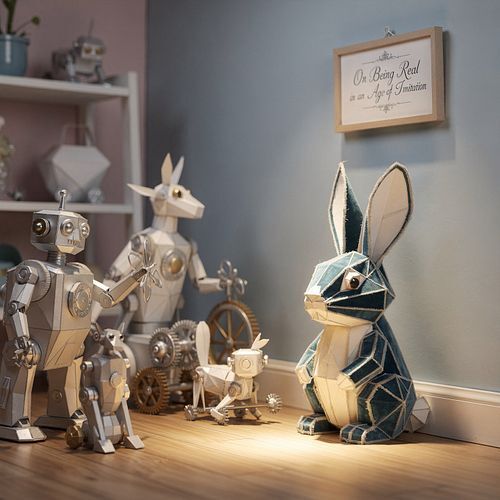
There is a nursery in Margery Williams' 1922 story that is full of expensive, mechanical toys. Toys that do impressive things. Toys that move and spin and demonstrate their capabilities loudly. And in the corner of that nursery, largely overlooked, sits a small velveteen rabbit who wants more than anything to become Real.
He asks the oldest and wisest toy in the nursery, the Skin Horse, worn and saggy and missing most of his mane, what Real actually means. And the Skin Horse's answer, given to a children's audience in 1922, turns out to be one of the most useful things ever said about professional positioning in an overcrowded market.
Real isn't how you are made. It's a thing that happens to you. When a child loves you for a long, long time, not just to play with, but really loves you, then you become Real. It doesn't happen all at once. You become. It takes a long time. Generally, by the time you are Real, most of your hair has been loved off, and your eyes drop out and you get loose in the joints and very shabby. But these things don't matter at all, because once you are Real you can't be ugly, except to people who don't understand.
Margery Williams - The Velveteen Rabbit (1922)
The Velveteen Rabbit
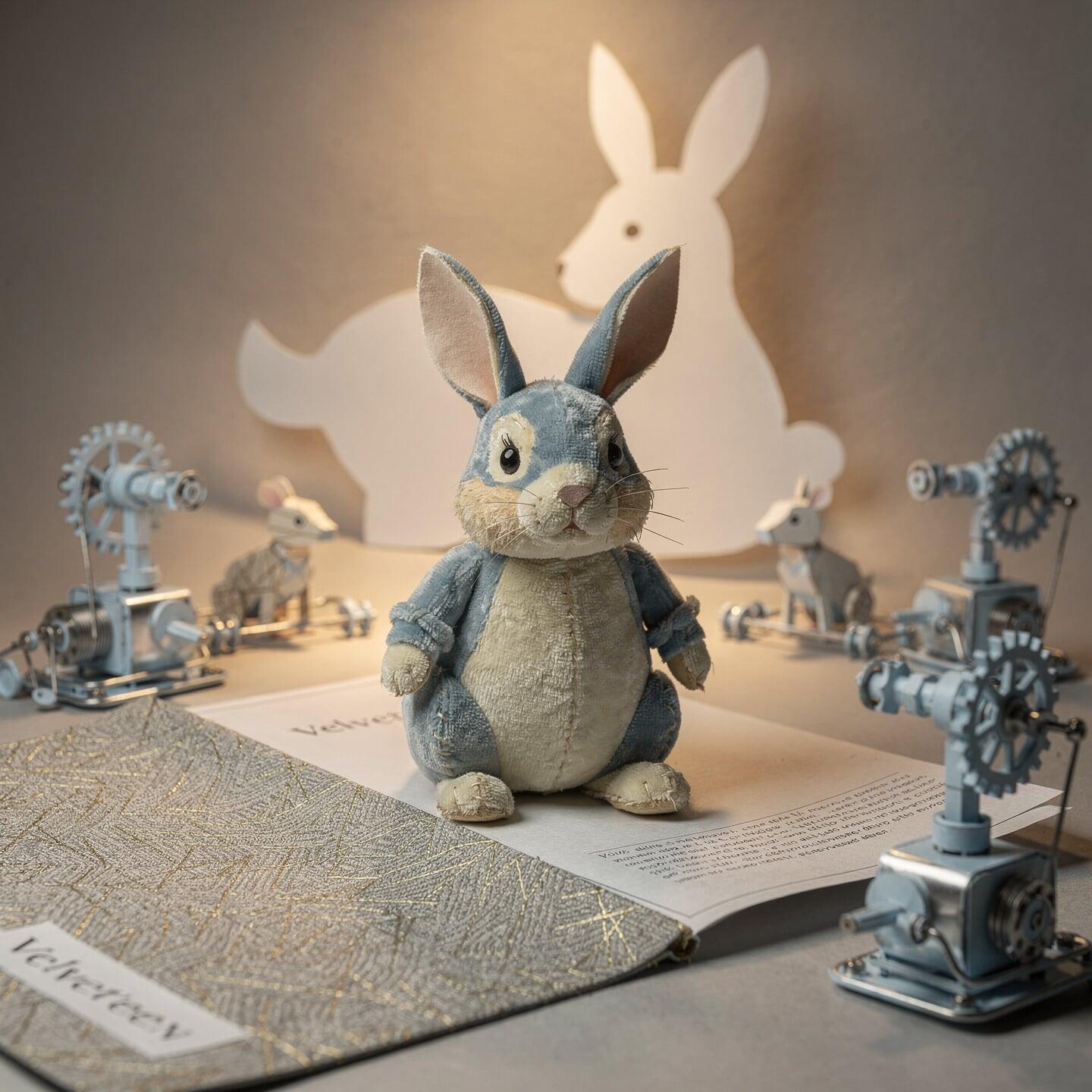
It is worth pausing on what the rabbit is actually made of before going further. Velveteen is a cotton fabric woven to imitate velvet. It looks like velvet. It has the texture and appearance of velvet. But it is the affordable, mass-produced copy of the real thing. The rabbit is therefore doubly an imitation, made of fake velvet, and pretending to be a real rabbit. He is, by his very construction, a copy of something more expensive and more genuine.
Margery Williams named him with extraordinary precision. The thing made of imitation material, imitating a real animal, becomes the most Real object in the nursery. Not despite being made of imitation fabric. Not despite being a copy. Because of what happens to him through genuine love over time.
Real is not a performance. It is not a coat of fresh paint. It is not the impressive mechanism of the mechanical toys who can do things the rabbit cannot.
Real is what happens when something is genuinely itself, consistently, over time, for the people who need it to be exactly what it is.
The professional world in 2026 is the nursery. And it is very full of mechanical toys.
The pull toward imitation
Catherine Kaputa, whose work on personal branding has shaped a generation of professionals, identifies the pull toward generic positioning as the single most common and most damaging mistake people make when trying to build a professional identity.
The instinct, she observes, is to copy. To look at what others in your field are doing and do a version of the same thing. To present yourself in the language and format that the market seems to expect. To be a credible, professional, competent version of the category you belong to.
The result is what she calls a 'me-too brand'.
Same letters. Same badge. Same assumption of sameness.
Being a me-too brand like "team player committed to customers" won't get you anywhere. It's so overused and commonplace, the words don't have any meaning anymore. You'll always be viewed as the generic, so you'd better have a low price.
Catherine Kaputa - The New Brand You (2022)
The pull toward imitation is not laziness. It is a rational response to uncertainty. When you are not sure what to say about yourself, saying what others say feels safer. When you are not sure what your positioning is, borrowing the language of your profession feels like a reasonable starting point. When you are worried about being judged, presenting a polished, conventional surface feels like protection.
But the polish is the problem. The conventional surface is precisely what makes you invisible to the person who is looking for someone genuinely different. They scroll past the mechanical toys because mechanical toys all look the same.
They stop when they find something that feels Real.

What the nursery looks like now
The nursery today, are the professional social media sites. It is the professional services directory. It is the search result page wher many professionals present themselves in language so similar that the only visible differentiator is price.
These professionals are competent, excellent, many built their presentation the way they did for entirely rational reasons - because that is what their professional environment told them a credible, successful practitioner looked like.
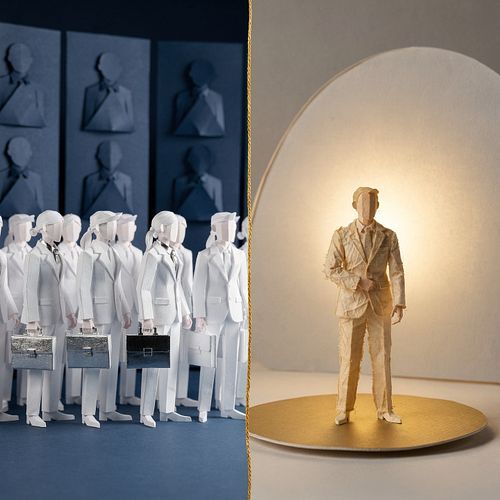
The navy blue website. The city skyline. The biography written in the language of the category. These were not failures of imagination. They were accurate readings of a world that had consistent signals. The world changed. The presentation has simply not yet caught up.
The problem is not the quality of what they do. It is that they have described what they do in the language of their category rather than the language of who they actually are.
They have made themselves legible to a professional peer and invisible to the client who is looking for someone specific.
The mechanical toys in Williams' nursery could do things the velveteen rabbit could not. They were objectively more impressive in demonstrable ways. But they were interchangeable with each other.
The rabbit, once Real, was the only thing in the nursery that the child actually needed.
In a market full of people saying the same things with different logos, the professional who is genuinely themselves is not just different. They are the only one. You cannot have a me-too version of someone who is actually Real.

What becoming Real actually requires
The Skin Horse is honest about what becoming Real costs. Most of your hair gets loved off. Your eyes drop out. You get loose in the joints and very shabby. It does not happen all at once. It takes a long time.
In professional terms this means: becoming Real requires being willing to be specific about who you are and what you stand for, which means accepting that you will not be right for everyone.
It requires being willing to show up consistently as yourself rather than as the most acceptable version of the category you belong to. It requires allowing the process of genuine engagement with real clients over real time to shape what you become, rather than deciding in advance what the most impressive version of yourself looks like and performing that.
Kaputa makes the same point from a strategic direction. Authentic positioning, she argues, is not about presenting a version of yourself that is more appealing than the real thing.
It is about examining what is genuinely true about who you are and what you do, and finding the language that makes that truth legible to the people who need it. The brand narrative, she is emphatic, always has to be true. (And this is not easy.)
Personal branding is always about authenticity, but it means showing yourself in the most appealing way.
Catherine Kaputa - The New Brand You (2022)
Most appealing here does not mean most polished.
It means most true to what makes you genuinely valuable to the specific person you are trying to reach. The rabbit at the end of the story is not beautiful by any objective standard. Most of his hair is gone. His eyes have dropped out.
But to the child who loves him he is the most important thing in the world, because he is Real and nothing that is Real can be replaced by something that is merely impressive.
The generic is the enemy
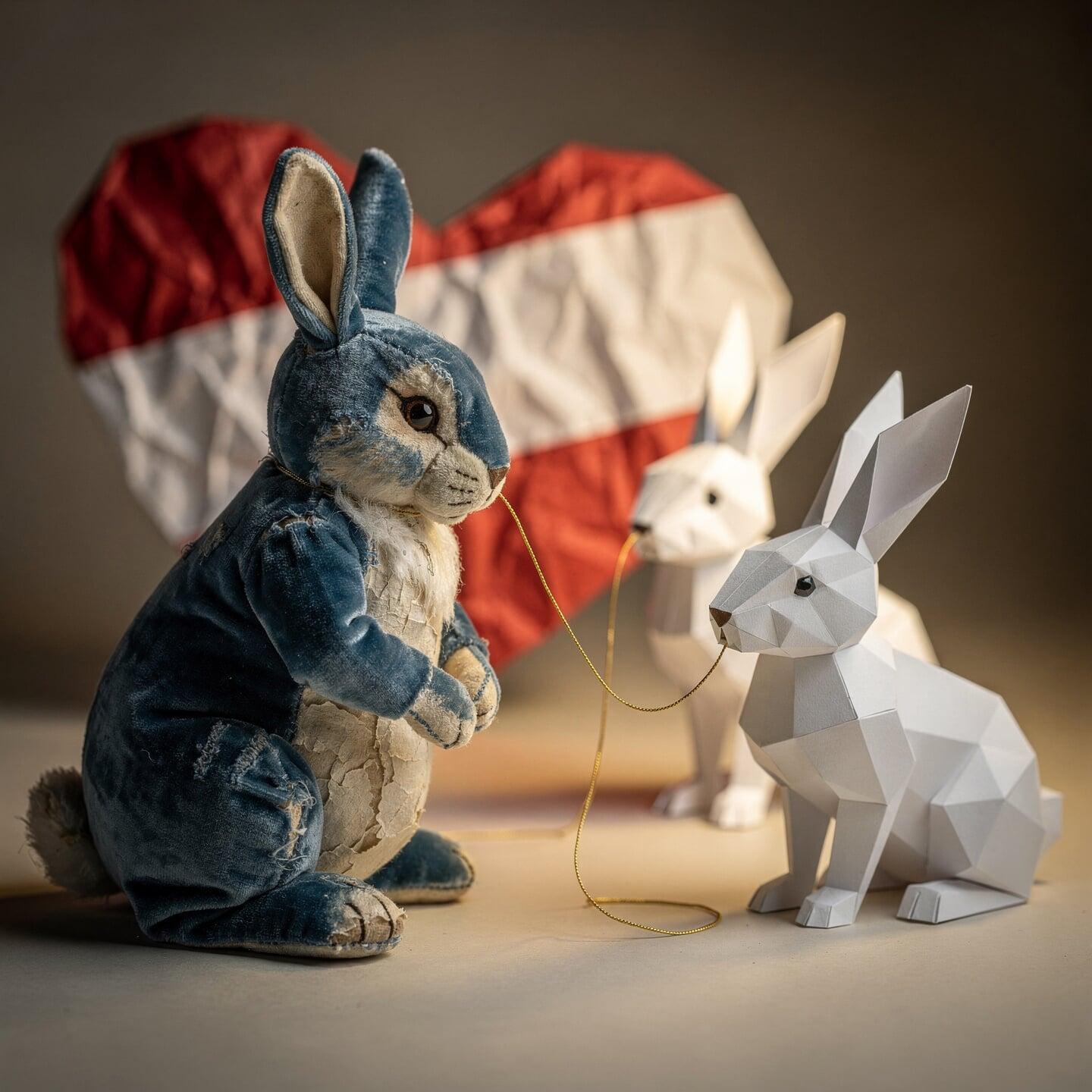
There is a specific moment in Williams' story that is worth pausing on. The velveteen rabbit, sitting in the garden with the boy, encounters two real rabbits. They are everything he is not - alive, wild, capable of things he cannot do. They invite him to join them. He cannot. He is stuffed. He has no hind legs that work. And in that moment he feels acutely how much he lacks.
This is the moment that many professionals recognise from their own experience. The competitor with more credentials, a larger network, a shinier profile, a more impressive client list. The person in the room who seems to have all the things you do not. The instinct in that moment is to try to become more like them. To acquire the things that seem to make them impressive. To borrow their language, their positioning, their way of presenting.
But the rabbit does not become Real by becoming more like the wild rabbits. He becomes Real by being exactly and completely what he is, for the child who needs him to be precisely that.
The professional who tries to position themselves by becoming a better version of their most impressive competitor will always be behind. They are chasing a target that is already moving. The professional who examines honestly what is genuinely distinctive about what they bring, what they see that others miss, what their particular combination of experience and perspective and way of working produces for the specific client who needs it, that professional is not competing with anyone.
They are occupying a position that nobody else holds.
Confusion is the enemy. The biggest mistake people make is trying to appeal to everybody. A brand that tries to appeal to too many market segments ends up appealing to no one. You are stronger when you narrow your focus.
Catherine Kaputa - The New Brand You (2022)
A closing thought
At the end of Williams' story, the velveteen rabbit is discarded.
The boy gets scarlet fever and everything in the nursery that might carry infection is burned. The rabbit is thrown on the rubbish heap to await destruction. And there, alone in the garden, he cries a real tear - because he has become Real enough to cry.
A fairy comes because of that tear. She kisses him and he becomes a real rabbit, released into the forest with the wild rabbits. When the boy recovers and goes outside to play, he sees a rabbit that reminds him of his old toy. The rabbit looks back and recognises him.
The sequence matters.
The rabbit does not become Real in order to avoid being discarded. He becomes Real and is discarded anyway. The becoming Real and the being thrown away happen in the same moment.
What the fairy rescues is not the toy. It is the Real thing that was always inside the toy, waiting to emerge.
The corporate presentation - the borrowed language, the expected surface - was the toy. The professional inside it was always Real.
The process of honest positioning does not create something new. It lets what was always there become visible.
That is not a small distinction. It means the work of positioning is not reinvention. It is excavation.
The mechanical toys in the nursery were impressive. The rabbit was Real.
In an overcrowded market, in an age where the generic is everywhere and the authentic is rare, Real is the only positioning that lasts.
From the blog · Into practice
The examination that reveals what is genuinely Real about your practice is the work nobody does alone.
Most professionals know their positioning is not quite right. They feel the gap between what they do and how they describe it. They sense that the language they are using is borrowed rather than earned. But the examination that would close that gap - honest, precise, done with someone who can ask the question you cannot ask yourself - rarely happens without a structured space for it.
That is what the business consultancy sessions at Alexander Christian are for. Not to tell you who you are. To help you find the language for what is already there
No specific outcome is promised. What the session offers is a structured space and the possibility of a clarity that changes every professional conversation that follows. What you do with it is entirely yours.

Terms used in this article
Plain-language explanations of the key concepts discussed above.
Authentic Positioning
Me-Too Brand
Generic Positioning
Real (in brand terms)
Positioning
The Pull Toward Imitation
Copyright and credits
The Velveteen Rabbit, or How Toys Become Real by Margery Williams Bianco was first published in 1922 by George H. Doran Company, New York, with illustrations by William Nicholson. The work is now in the public domain in the United Kingdom and the United States. The quotation reproduced in this article is taken from the original 1922 text and is used on that basis. No claim is made over the original work. All rights in any current editions, adaptations, or illustrated versions remain with their respective rights holders.
The New Brand You © Catherine Kaputa, 2022, published by Nicholas Brealey Publishing. All rights reserved. The brief quotations reproduced in this article are used for the purposes of commentary, criticism, and review and do not constitute reproduction of a substantial part of the work. No endorsement by the author or publisher is implied. Readers wishing to engage with Catherine Kaputa's work in full are encouraged to purchase the book directly.
Disclaimer
The observations, analysis, and commentary in this article are the author's own and do not constitute legal, regulatory, marketing, or professional advice of any kind. The article is provided for general informational and educational purposes only. Nothing in this article should be relied upon as a substitute for independent professional advice specific to your circumstances. Please read our full disclaimer.
Authentic personal brand professional, Professional positioning London, How to stand out overcrowded market, Personal branding authenticity, Generic professional positioning problem, Catherine Kaputa New Brand You, Business consultancy Harrow London, Brand Me professional visibility, Self employed professional positioning, Alexander Christian business consultancy, How to be distinctive professional services, Velveteen Rabbit positioning, Me too brand professional Career strategy visibility